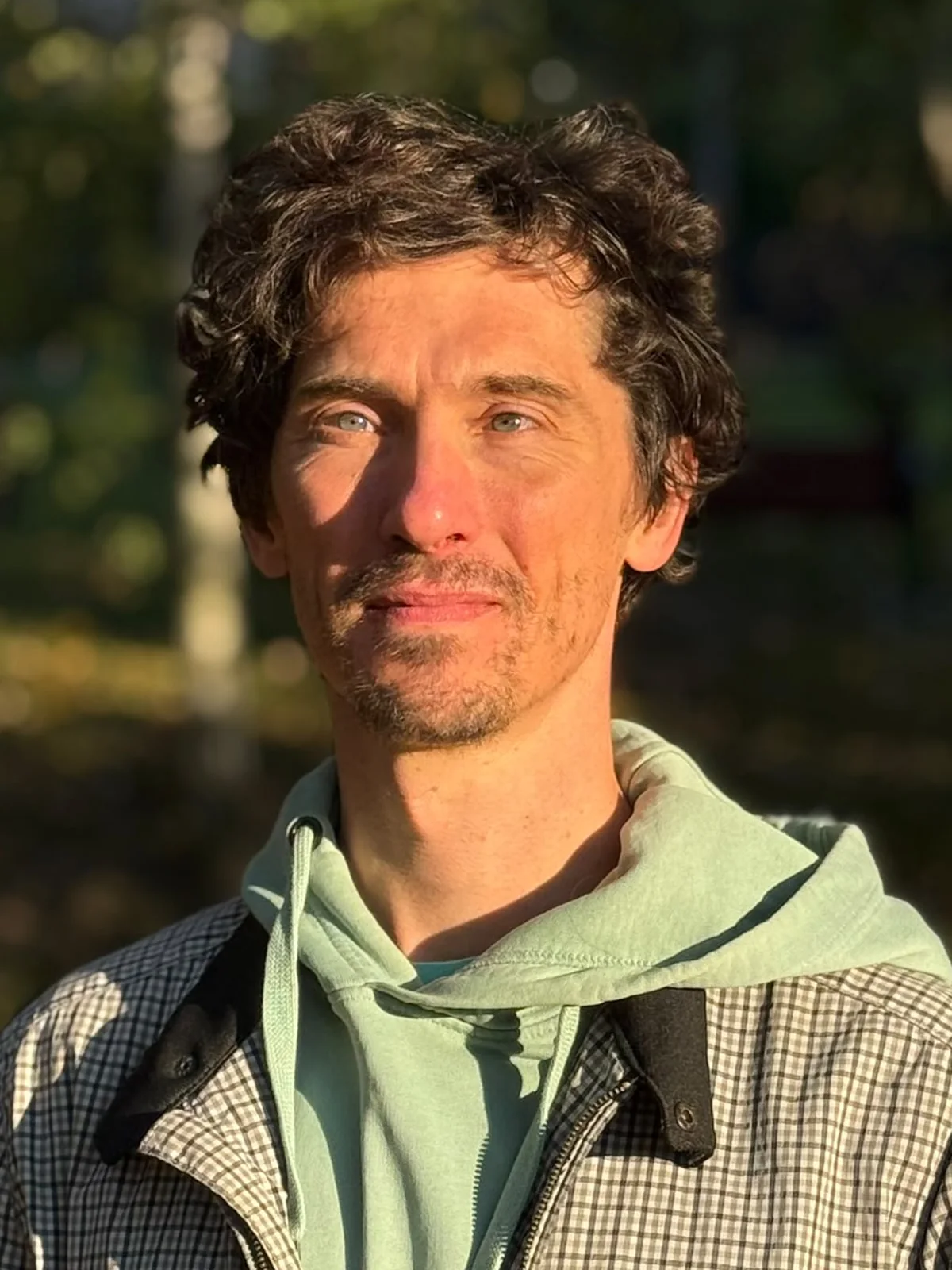
Dariusz Małojło looking into the camera with a gentle smile, in an autumn park, in warm sunlight
Dariusz Małojło · creator of the DMCO® method

I teach connection with yourself, deep presence and a relationship with your own breath.

I’ve been doing this for over a decade. It began with a body that wouldn’t let go.

The way I am with another person today grew out of that path.

A body that wouldn’t let go

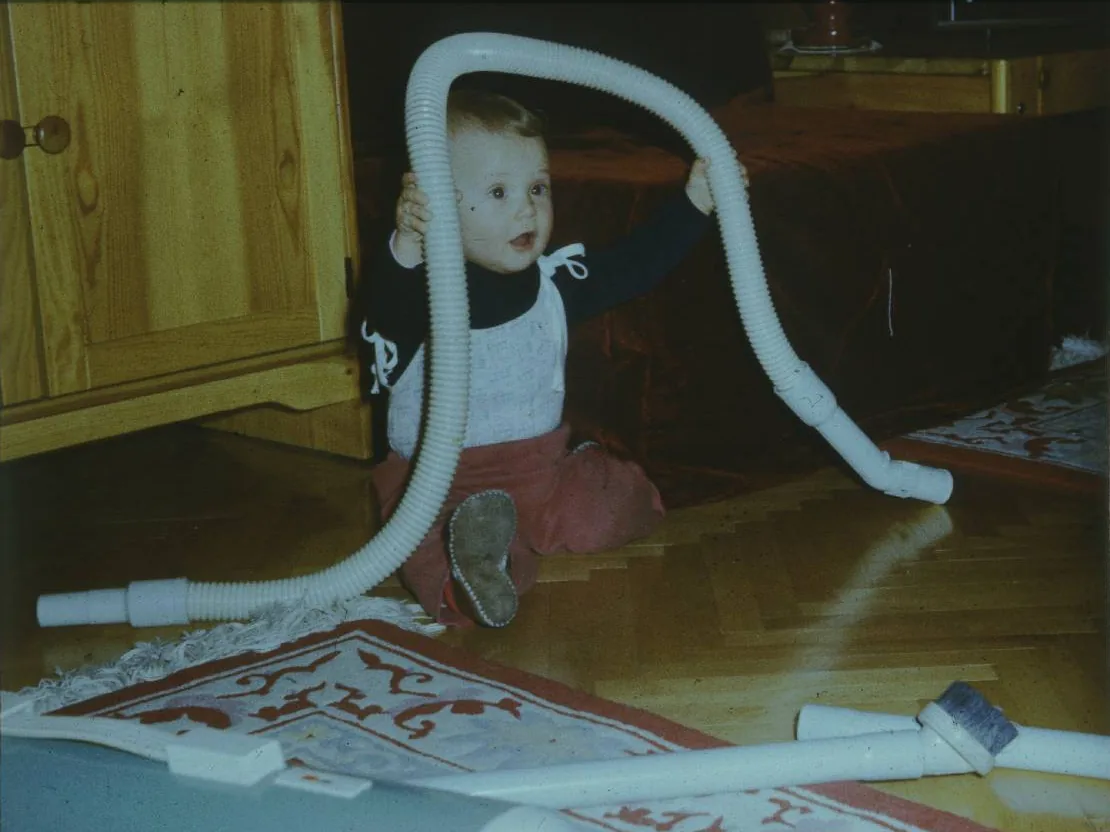
When I look at photos from my childhood, I see a joyful, active child. Quite soon that picture began to change. As a small boy I became sad and frightened — I would have liked to hide from the world. I was afraid to play with other children; every relationship took a great deal of effort.

Dariusz Małojło as a small child, holding a vacuum cleaner hose up over his head

Over time my body grew stiffer and stiffer — far stiffer than it should have been at that age. At five, I couldn’t sit cross-legged. My joints ached, I kept falling over. Nobody had a name for it back then. Sometimes I heard that I was oversensitive, but that was simply how I was. I didn’t understand then that I was taking other people’s emotions as my own.

What gave me a safe harbour was sport — first football, later basketball. Clear rules, play and competition. I loved it.

But inside there was a tension I couldn’t name. An ordinary conversation with another person frightened me. That was how it was, so I got used to it.

A mind that loved to build

My mind is very flexible — it loves solving problems, building and improving things. From Lego bricks to games I made up myself. Perhaps that is what took me to the Cracow University of Technology, where I completed two master’s degrees and became an engineer.

I found work in industry, where I could do the same: build, improve and solve problems. Pros, cons, profits. Quick decisions, sometimes a lot of responsibility. Everything had to work and fit together. I was good at it.

For thirty-two years I thought I was feeling.

Freedom found in movement

Right after university I felt an urge: besides sport, I needed something new. I signed up for contemporary dance — and something in me stirred. A joy of expressing myself appeared, one I had never known before.

I went to classes every day: after a full day at work I would take the tram to contemporary, contact improvisation, ballet. My body was tense, unlike most dancers’. I felt like a blacksmith tempering and forging iron. Out of this grew a passion that reached beyond my limitations. Along the way came performances on stage and outdoors, dance theatre and my first choreography of my own, which took me to the Solo-Duo competition in Budapest.

For the first time in my life I felt freedom — that in movement I am free. I am alone with myself, there is nothing around me, and I am free.

Next to supple dancers, every class was a fight with pain. When I tried to sit back on my heels, Japanese-style, my legs stopped at forty-five degrees — and had no intention of bending any further. My teachers were surprised and told me I needed to stretch more. And then I noticed something that has stayed with me ever since. I started listening to myself. A thought came:

I do things the opposite way to what I’m told — and they work for me.

It wasn’t resistance. I simply need to activate something first, to settle my body — and only then stretch into it. Years later, exactly this would become the first step of the method: first connection and settling, then opening.

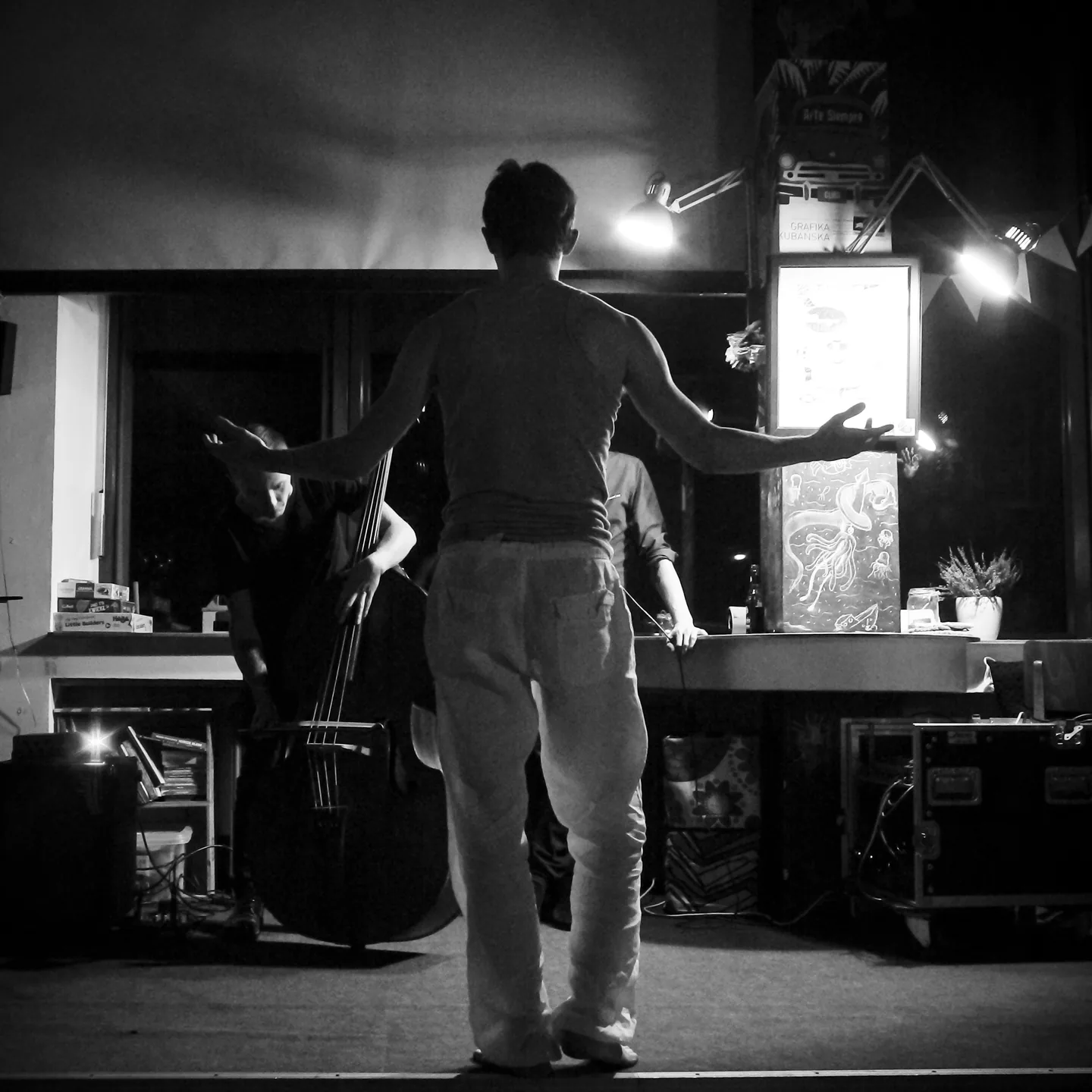
Dariusz Małojło dancing with his back to the audience, arms wide open towards the musicians. Black-and-white photo.
“Zmysł” (Sense), music and dance performance, Ars Cameralis Festival, Bielsko-Biała. Photo: Marcin Buk

Eight days with no way back

I first came across conscious breathing at a workshop a few years earlier. I thought: it would be good to work with people like this. And the thought faded.

It kept coming back over the following years, and I kept putting it aside. In the background there was the struggle of everyday life. My body was sending signals I didn’t want to read.

The decision came in hospital. A weekend alone, among people in serious condition. I lay there with a tablet in my hand, with sadness and anger — and at the same time with compassion for the people around me, and for myself. I asked myself: what am I doing here? I decided I would go, no matter what.

I went on an eight-day Biodynamic Breathwork & Trauma Release System training. I came from a completely different world. Five minutes into the first session, there was screaming all around me. I was terrified.

I wanted to run away after the first day. But I stayed.

On the second day, for the first time, I felt myself. And for the first time I felt love — for myself, for another person, for the world.

That was when I understood what those thirty-two years had meant. What I had called feelings until then were names with nothing behind them — my emotions were described in my head, but not felt in my body.

To me, all of it was logical and made sense.

Module by module came practice and certification. First a thought appeared: what if I could make this my everyday work? In the end, the decision — I’m going for it.

After the course I started with nothing: not a single client, not a single collaboration. It was hard. For many years I had to keep ploughing on — fighting not against reality, but for myself.

That is how I entered the world of breathwork — through practice, not theory. I was invited to Beskidzki Instytut Psychoterapii, a psychotherapy institute in Bielsko-Biała — first to lead sessions, then to join peer supervision meetings. For nearly three years I was the breath person among experienced psychotherapists. Case studies, real people, real processes. My own training at the time was mainly in somatics and trauma work.

During that time I also assisted at trainings and at courses for future BBTRS facilitators — back where it all began. It was a school no book could have given me.
Moving away from fireworks

My early work was intense. Catharsis, deep emotional expression, fireworks in the room. It looked spectacular, and it worked. For a while I thought that was the whole point.

Then I began to see two things. The first: these processes ran close to burnout. They needed a long integration, and people walked out wide open into a world that wasn’t waiting for it. For some it was too much. I know that, and I remember it. The second was about me. The client would leave, and I would stay behind with a weight no one had taught me to carry. After a strong group session I would spend three days disconnected.

I was shedding layers I had taken on. It was a form of defensive reaction.

Everything I do today grew out of that. I started looking for something simpler, less effortful, more organic — a process that is safe and doesn’t send people out into the world cracked open. Integration was to happen during the meeting, not after it.

This isn’t gentleness as a leading style. It’s a conclusion drawn from my own burnout.

The method that changed me

I led my first Breath Ceremony on 20 January 2017. The whole sequence — circle, connection, movement, breathing lying down, integration, closing — had appeared a few weeks earlier. Along with it came the playlist I still offer my instructors today.

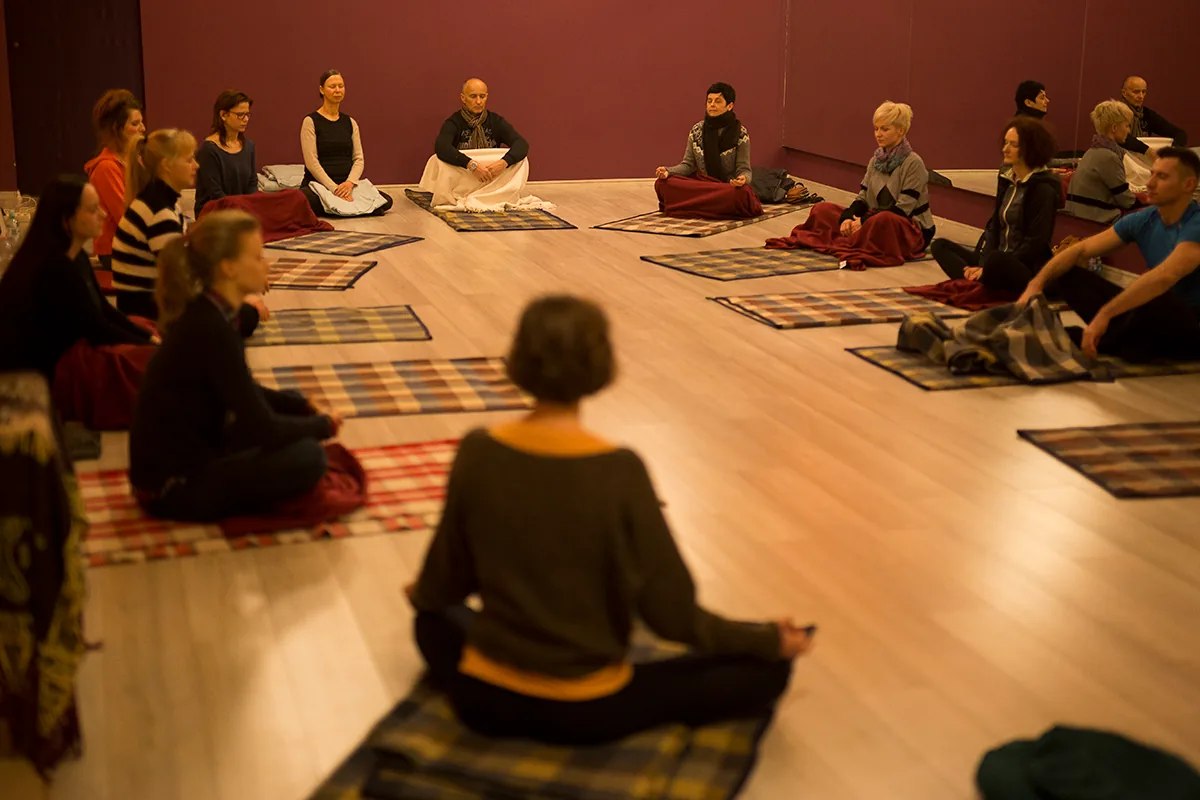
Participants of the first Breath Ceremony sitting in a circle on mats, in the warm light of the room.
Breath Ceremony, Bielsko-Biała. Photo: Ewa Wolf

Fourteen people signed up. Two hours later I led a second one — twenty-eight people in a single day. It was the first time I had ever led a group, yet I felt as if I had been doing it for ages. I was surprised by how both Ceremonies unfolded and by what they brought.

Over the next four years I led around seventy Ceremonies. I travelled across Poland and abroad: yoga centres, cultural centres, festivals, a historic building in central London, a small room in Brussels. There was no method back then. There was me and my Breath Ceremony.

The Five-Phase Formula emerged from that structure later. I recognised it rather than designed it — what I had been doing intuitively had its own logic: regulation of the nervous system, the field, relationship.

I didn’t invent it — it came to me. Piece by piece.

The name followed the same path. First Breath Ceremony, then DM Breath Ceremony — that’s what the first certificates said. Only at the very end did DMCO appear, and later what it stands for: Deep Mindful Cellular Oxygenation. I know — it sounds scientific. The same pattern as with the Ceremony and the Formula: first something appeared, and only afterwards did I understand what it was.

Teaching this work to others, I learned it all over again. The method I had recognised changed, one thing after another, everything I thought about leading.

Today

Where I am now

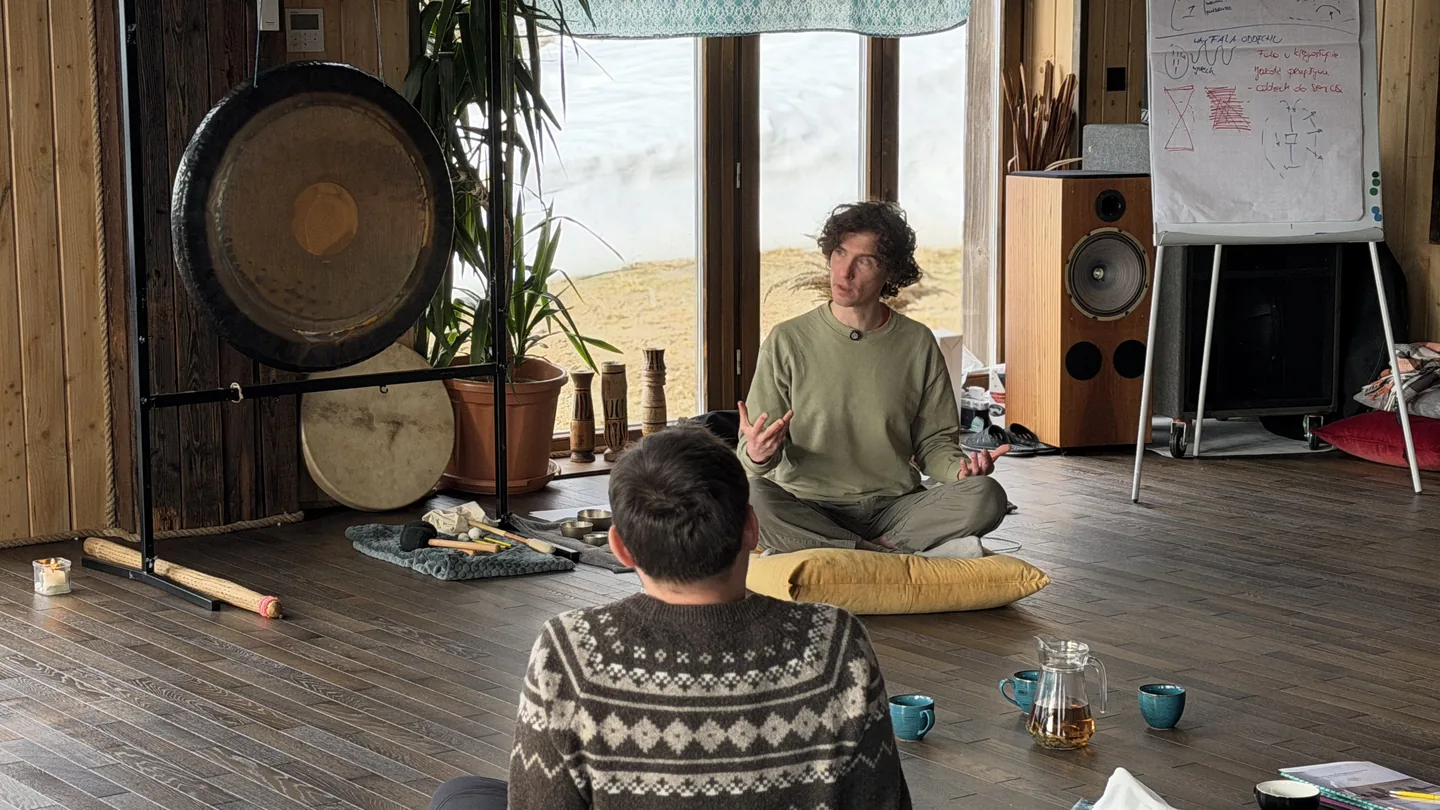
Dariusz Małojło sitting cross-legged on a cushion, talking with a participant. Beside him a gong and a window looking out on snow.

For over ten years I have been leading trainings, sessions and Breath Ceremonies: in Poland, Belgium, the United Kingdom, Ireland, Iceland, Morocco, the United Arab Emirates and Egypt. I also organise journeys to the Sahara, where breath meets the space and silence of the desert. Since 2022 I have been teaching instructors. More and more of them now lead sessions of their own.

The wave of breath is no longer something I do as an exercise. It has become part of my everyday life and switches on by itself — in conversation, in the sauna, at home. These days I practise less on the mat and more in life.

Not long ago I couldn’t sit cross-legged. Now people ask me if I’m a yogi. But this is about something other than range of movement.

Today I have access to myself — and I know how to accompany someone who is still looking for it.

And that is exactly what I want to share.

For a long time I was the task-driven one, the man for special missions. Today I know it is always a two-way meeting: I follow what is happening in the other person’s body.

Presence

What I bring to a meeting

I bring what I have worked through in myself — a calm I don’t put on for an hour like a role. Another person’s body senses it faster than words.

I don’t judge what happens. There is no right or wrong; there is what is available on a given day. I don’t interpret anyone else’s experience or add my own explanations to it.

This is how I see it: a guide who is truly present creates a space that does the work itself. My role is to be there attentively and not get in the way.

If something on this path feels close to you

Each of these places can be a beginning.

One to one

One-to-one session

A one-to-one meeting, in person or online. We begin with a conversation; then the breath leads.

See what a session looks like
On the road

Journeys and expeditions

A journey to the heart of the desert — an expedition to the Sahara in the rhythm of DMCO, from the desert to the ocean.

Discover the journey
Learn how to guide others — become a breath instructor

DMCO® Instructor Training

For those who want to go deeper into this work and accompany others.